


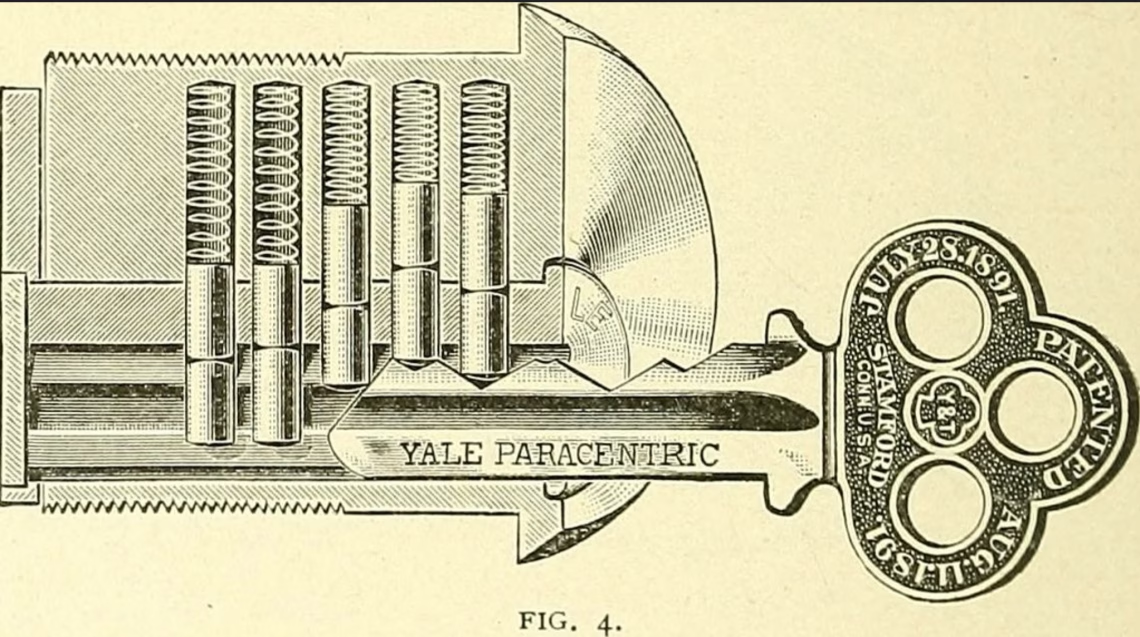
There are a lot of key types out there, and the paracentric key is one of the oddest looking.
The name comes from the keyway, the slot the key slides into. In a paracentric keyway, the ridges inside the slot reach past the center line of the lock from both sides, so the opening zigzags instead of running straight. The blade of the key is bent to match, which is why a paracentric key looks crumpled when you view it from the end.
That shape is the whole point. A pick has to snake through the same zigzag to reach the pins, and there is very little room to work once it gets there. That is why paracentric locks have long been used in prisons and jails, where a lock that resists picking matters more than anything else.
Prison keys of this type also tend to carry small, tightly spaced cuts near the tip along with that contorted profile. Their blanks are tightly controlled, so you will not find them at a hardware store.
The same idea, a key that is hard to copy, matters to businesses too. A restricted keyway, with blanks that are not sold to the public, is often part of a master key system, where each key opens only the doors it should.
Found an unusual key in an old desk drawer or at a flea market? Call (484) 891-1922 and describe it, and we may be able to tell you what it once opened.
Photo: Flickr


